
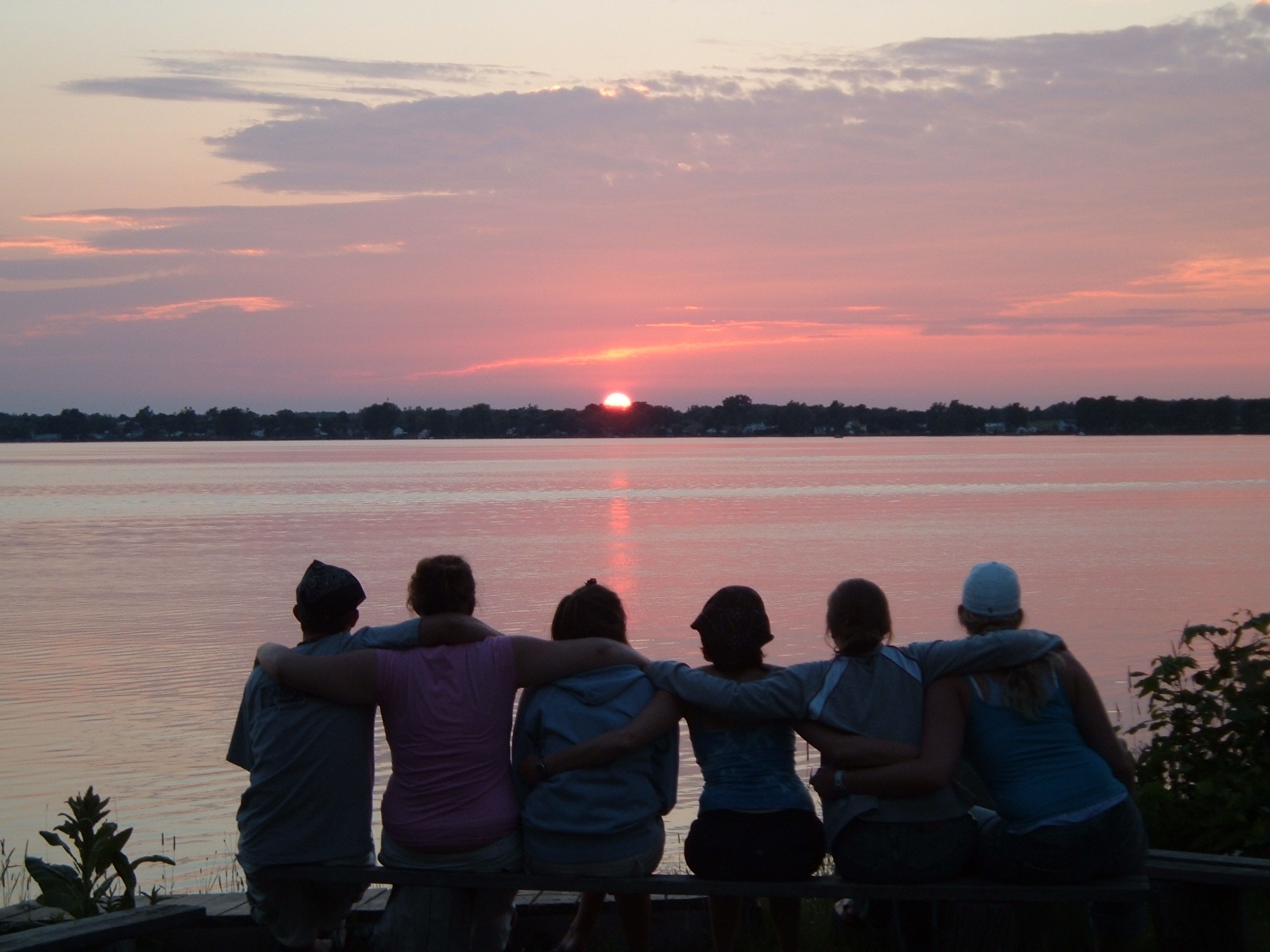
Every summer, nearly 900 children living with serious illnesses arrive in Muskoka for what looks, sounds and feels like a classic Canadian camp experience.
There are swims in the lake, loud dining hall singalongs, campfires and friendship bracelets. But behind the scenes, a full medical team quietly delivers chemotherapy, blood transfusions and dialysis, ensuring children who often cannot attend traditional camps get the chance to experience something many take for granted: a normal childhood.
Campfire Circle is a Canadian nonprofit organization that provides free, medically supported camp programs for children and families affected by serious illnesses, particularly childhood cancer. Its overnight camp programs in Waterford and Rosseau, Ontario, are designed so that no child is left behind.
“We do this because we want to care for the whole child,” says Sandra Ross, Nursing Director at Campfire Circle.
“We really try to focus on children who have limited access to other programs because of their medical complexity.”
Ross first joined Campfire Circle nearly 20 years ago as a volunteer nurse. In 2023, she stepped into the role of Nursing Director, overseeing the organization’s programs across Ontario.
For many families, the Campfire Circle journey begins long before camp bags are packed. The organization’s reach extends into hospitals across the province, meeting children at some of the most difficult moments of their lives.
“We run hospital programs in all major paediatric centres in Ontario; SickKids, CHEO, London, and McMaster,” Ross says. “At SickKids you can expect within the first day of being diagnosed with childhood cancer that you will meet someone from Campfire Circle.
“There will be a knock on the door. It’ll be one of our camp counselors (who are secretly highly trained programing staff), and they’ll say, ‘Hey, want to make a paper airplane?’
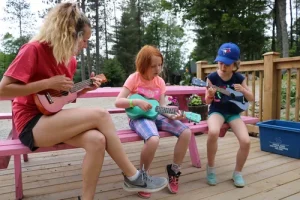
“We are there by their bedside making a connection, playing ukulele, doing slime and just offering those moments of normalcy to what is otherwise a complete topsy-turny time.
“What I often think about is how isolated their experience is and how disruptive it is to a normal childhood. We can offer that support throughout their whole journey.”
That ongoing support eventually leads many families to the organization’s signature overnight camp experience.
“Our Muskoka site is where we predominantly run our kids-only camp. Our southwest Ontario site, Rainbow Lake, is where we run our family camp program. What’s really nice is we can care for the whole family there. So if the children are just too young, or not ready, or too sick to participate in the Muskoka kids-only overnight camp, we can still have them at the family camp where we can also welcome siblings and parents.”
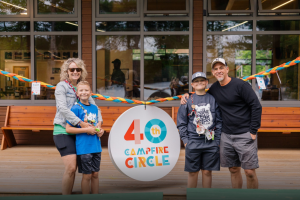
Campfire Circle has spent more than 40 years building a model that integrates medical care into the overnight camp experience. It is the only overnight oncology camp in Canada able to provide onsite IV chemotherapy and blood transfusions.
“What is really special is having that medical expertise on site, to be there to respond to an emergency, or to make sure they have ongoing care so that they can participate to the fullest,” Ross says.
“If you showed up, it would look like kids jumping in the lake, it would look like kids standing on tables, singing songs with each other, and it isn’t until you look really, really closely that you might see that a child has an amputation, or a central line, or they don’t have hair because they are receiving chemotherapy right now.
“That’s how we measure success.
“I would want you to come up and be like, ‘What are you talking about, this just looks like camp?’ and be able to look past the dozen or so medical staff that are sitting there.”
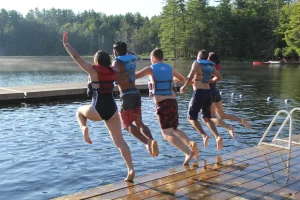
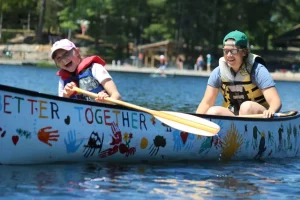
It takes a village, and in Campfire Circle’s case, it takes more than 600 volunteers and 100 medical volunteers to make that camp experience happen.
“I can speak from personal experience,” says Ross. “We don’t often get to see the fruits of our labour; we see them at their sickest.
“The opportunity to connect with them over a campfire, or singing in the dining hall, or playing a game of UNO while they get their blood transfusions really impacts your own medical practice and profession.
“And a lot of the medical staff that are there are the (children’s) care teams from home. They are our best advocates, they’re the ones talking to the families saying, ‘No, it’s okay you can send them.’ And then often the follow-up is, ‘Because I’m going to be there.’”
While medical volunteers play a critical role in the camp’s success, Ross emphasizes that the organization depends just as heavily on non-medical volunteers to truly bring the camp setting to life.
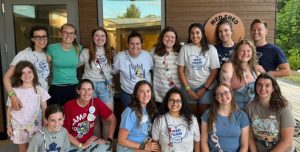
“We require about 600 volunteers a year to help look after these kids,” she says. “Program volunteers who are the camp counsellors, they are in the cabin with the kids 24/7. They are getting the sunscreen on, the hat and the water. The role they play is so important because they are the medical team’s first set of eyes. And because of that, we ask that all our volunteers are over the age of 19.”
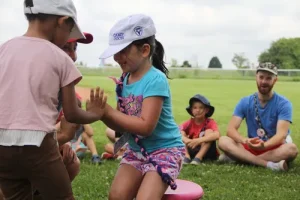
The program has grown significantly since its beginnings in 1983, when it operated as two separate camps — Camp Ooch and Camp Trillium — before merging into one organization. Today, Campfire Circle continues to evolve as medical technology advances and has expanded beyond serving children with childhood cancer to also caring for children living with sickle cell disease, heart conditions, organ transplants and other serious illnesses.
“At the Muskoka site we will expect 900 children this summer,” says Ross. “We offer seven weeks of overnight camp that have targeted dates for different specialty populations. That’s partly to make sure we can get the right medical staff on site for the kids and making sure that they can easily find someone who has had a shared experience with them.
“In their home communities they are the kid who has cancer, or had a kidney transplant, but when they get up to camp they’re just a kid. No one is looking at you any different.”
The impact of these camps is evident not only in the treatments provided, but in the way campers continue to return year after year, long after remission and well into adulthood.
“We have a number of nurses who were former campers,” Ross says. “Personally it makes me just so happy that they didn’t walk away from that experience and think, ‘I never want to see another nurse in my life.’ They were inspired to become nurses and come back to a place that was impactful and meaningful in their healing journey.”
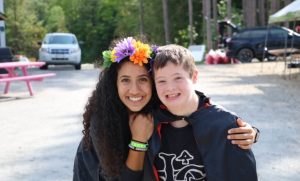 Nurses like Maram Muktar, who was diagnosed with cancer at the age of four. Muktar’s journey with Campfire Circle spans nearly her entire life. She attended the Muskoka overnight program in 2005 at the age of six, then again from 2010 to 2017 as a childhood cancer survivor. From there, she volunteered as a camp counsellor and later joined the medical team in 2021. In a way, Muktar never left Campfire Circle.
“What I would say about Maram — because she has a shared experience — she connects to the campers in a way that those of us who aren’t childhood cancer survivors could never totally understand,” says Ross. “When Maram says, ‘I understand. I get it.’ She really does.”
Now Muktar works at Orillia Soldiers’ Memorial Hospital in a general paediatric unit, working with families and children through their illnesses, and in the NICU, caring for premature infants.
“I love working with kids,” Muktar says. “Trying to make the medical treatment fun so that you can provide the care you need to do, it just makes the job that much better.”
Muktar is a strong advocate for Campfire Circle, and for five years has been a valued member of the medical team.
“To get the time to volunteer (at Campfire Circle). It’s not hard, I get my schedule in advance, I see what days I have off, or sometimes I book my vacation time too.
“Camp is non-negotiable for me. I have to go to camp. I will go as much as I can.”
As a volunteer at Campfire Circle, you’re playing the activities with the children while working closely with the medical team at the “Med Shed.” Volunteers take a divide-and-conquer approach, always finding ways to bring treatments and care to the children without disrupting their camp experience.
“That’s the main goal,” Muktar says. “We always think, what else can we do to not pull them away from activities? Obviously there are some things that they need to come to the Med Shed for, but it doesn’t mean that we stop the activities and the games and the dance parties and everything else that we do in the Med Shed while they are getting their treatment.
“We’ve had kids where we’ve taken their IV pole attached to whatever meds they needed, brought it right with them to the campfire and arts and crafts. A nurse was with them the whole time and we gave them whatever meds they needed while they continued hanging out with their friends and cabin mates.”
Muktar knows firsthand the importance of building those friendships and bonds, since she was once a camper at Campfire Circle.
This is Maram Muktar’s Story.
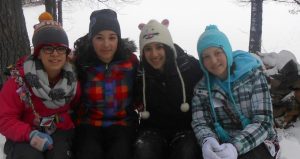
“I got there and everyone had been through a different version of the same thing.” Muktar says, “It was nice not to be the only kid that had missed a ton of school because they’re sick, or they’re bald because they lost their hair.
“It was very isolating at school being that person. At camp it was nice to just be able to go as a kid. Nobody asks why you’re bald; it’s not anything abnormal. Which is nice, because you get to actually make friends and enjoy the activities and build incredible skills that you can use through life. I am still connected to quite a few friends that I met in 2010. My first year back, we were in the same cabin and we are still really close friends today.
“It’s a special bond. These friendships, it’s hard to explain, you are just connected in a way that you wouldn’t be with anyone else. It’s an understanding you have without voicing out.
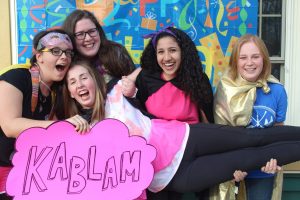
“And that’s the special thing about being able to go back now. I’m able to create that space for other kids, so that they don’t have to be worried about judgement or anything like that.
“Being singled out and bullied at school was really hard, but then going to camp and not experiencing that was very healing for my inner child. I remember coming home and not being able to stop talking about all the amazing things and people at camp because we were all included.”
“My parents were definitely nervous, especially the first time I went to camp when I was little, because I had never been away from them and I was still at the tail end of my treatment. But they gave me an option. They said, ‘Okay, get through a week and I’ll come pick you up if you don’t want to be there anymore.’
“And honestly it got to a point where I was like, ‘No, I don’t want to come home. This is great!’”
Those early experiences in the hospital and within camp ultimately helped shape the career Muktar would later pursue in life.
“I always knew growing up I wanted to be a nurse. I still remember my favourite nurse to this day. She looked after me for a very long time and I always told my mom, ‘I want to be like Julie. Julie is the best. I want to be like Julie.’
“The way that she made me and my family feel is exactly the reason I became a nurse. I want to be able to create that space of support and care for those families going through difficult journeys.”
Muktar now does just that, working alongside fellow nursing volunteers who share the same goal. Together, they work diligently to ensure each child’s care plan follows them to the overnight camp sites. Coordinating blood work, preparing treatment schedules and arranging chemotherapy to be on-site.
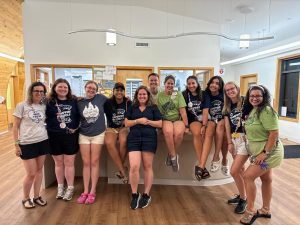
“The work environment with everyone (at Campfire Circle), it’s super fun. We are always laughing and making the best of the time we get there. When we are not caring for the campers, we are out there doing the activities with them, trying to have as much fun as they are,” Muktar laughs. “I think it’s super important for them to see us out there doing the activities and getting to know the campers.
“We had a really hot day last summer, and went out with our little cart and handed out freezes and sunscreen and reminded everyone to wear their hats. I’ve built great friendships with the nurses at camp.”
Today, more and more families are discovering the support available to them during the hardest moments of their lives. Both Sandra Ross and Maram Muktar see raising awareness as an essential part of helping more families find Campfire Circle.
“If I could bring awareness to how incredible this place has been for me and how incredible it’s been for campers and families, I’m willing to do anything. I’m willing to get as many families and kids up there as I can.
“Campfire Circle is a support group, but a fun one. It’s a hard place to be, being sick and going to treatment,” says Muktar. “But Campfire Circle is such an amazing support for kids, for their siblings and for their parents, getting them through this hard time. I always encourage all my patients to look into Campfire Circle.”
That support extends far beyond the campgrounds and into the broader Simcoe-Muskoka and Parry Sound healthcare community as well.
“We couldn’t do it without the local community,” Ross says. “We are so lucky to have the support. Orillia Soldiers’ Memorial Hospital is a wonderful partner, as is the support we receive from both Bracebridge Hospital and Parry Sound Hospital when we need to send our sickest children for more care. We are incredibly grateful to them.
“We bring some of the sickest children in Ontario to Muskoka. Every summer, we bring 900 of them. And we are always incredibly grateful to the community for the interest, for the support, for sharing the stories and for helping make it happen.”
Campfire Circle’s programs continue to be offered free of charge to children and families, thanks to the generosity of donors and community partners. Throughout the year, fundraising events including 10k runs, cycling marathons and bonfire gatherings bring communities together from Toronto to Niagara to Muskoka in support of the cause.
“Always reach out,” says Ross. “We love to answer questions and we want to make sure that this is the best experience for everyone. We acknowledge that the overnight camp site might not be for everyone right now and that’s okay. We can meet them where they are at.
“And thank you for trusting us.”
To learn more about Campfire Circle, visit www.campfirecircle.org.