

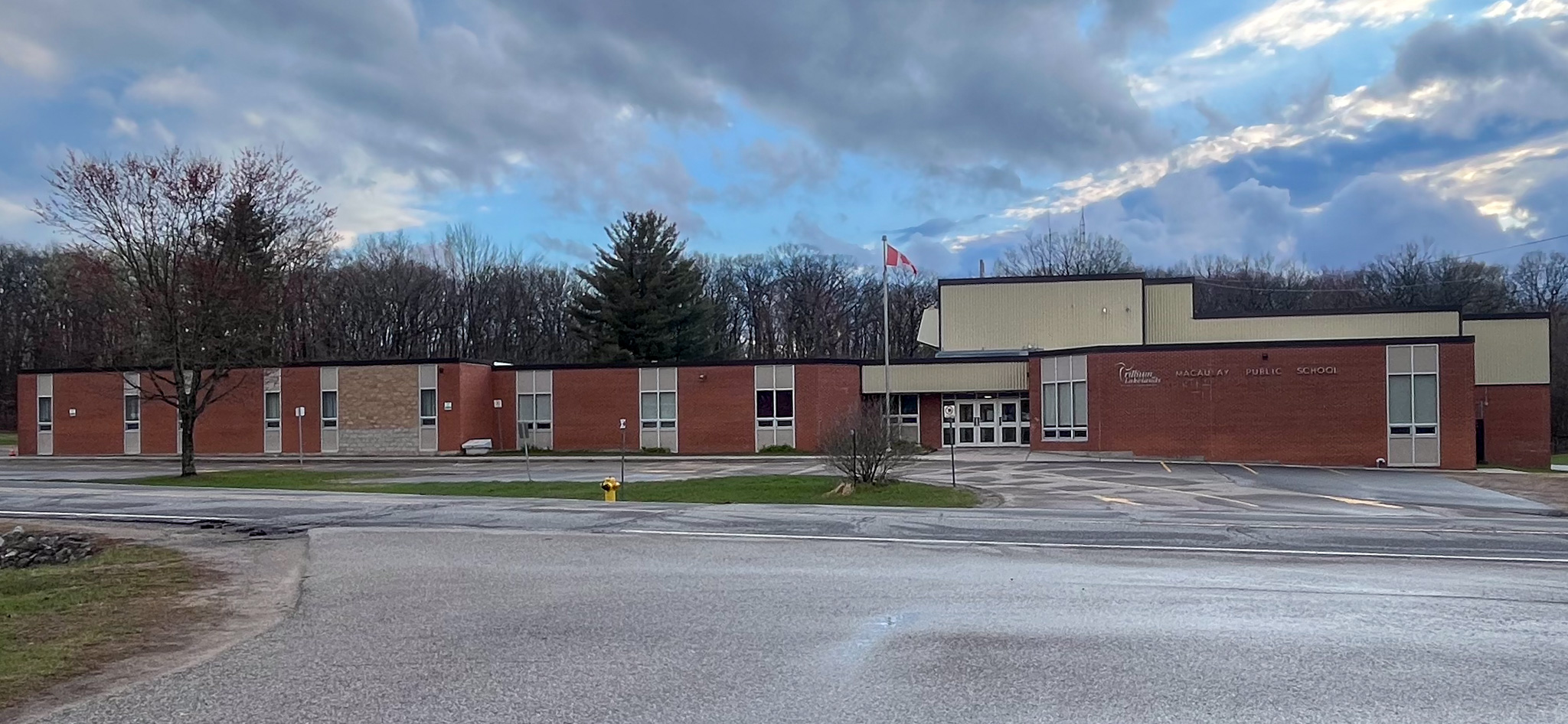
Parents of children attending Macaulay Public School in Bracebridge are voicing their concerns over the newly implemented “Attendance Awareness Initiative” at the school.
An email sent out to parents on March 31 explained that the initiative is aimed at getting 75 per cent of students to attend school 90 per cent of the time. According to the school, weekly attendance has been hovering between 68 per cent and 71 per cent throughout the current school year.
“The principal has initiated a school-wide challenge as an effort to elevate school spirit and bring awareness to the benefits of regularly attending school,” said Carolynne Bull, Manager of Communications Services for Trillium Lakelands District School Board. “This challenge is intended to be a fun-filled way for everyone to get involved.”
According to Bull, the school board has been sharing information directly with families about the positive impact regularly attending school has on student well-being over the last two years. She said that an initiative like this is not uncommon, and schools can choose whether or not they will do something similar to what Macaulay has established.
Based on a survey of the other public schools in the area, Macaulay Public School is the only one that has initiated an attendance-based challenge for this school year.
Brytnie Minns, whose children attend Macaulay, said that she and other parents are concerned that the program doesn’t tackle the real reason why children are not attending school regularly.
“Perfect attendance programs overall promote unhealthy, rigid standards, often resulting in burnout rather than providing true motivation, meaning the programs actually become demotivating.” said Minns.
“Encouraging attendance regardless of what may be going on outside of school, or when experiencing mental or physical health concerns, can have further negative mental or physical well-being impacts. This can lead to higher levels of burnout or disengagement.”
When asked about whether or not the attendance program will account for explained absences, Bull said that it will.
“The challenge has been designed with averages of all classes combined, and points given for various ranges of attendance,” Bull explained. “It is understood, school-wide, that students may be ill, have appointments, and/or need to miss school for other reasons which will not affect the challenge.”
It’s not just student well-being that parents are worried about, but also bullying and harassment that children may be facing at school. Minns said that parents are already keeping their children home from school due to these concerns, and this program will only cause them to grow.
“Attendance is an individual issue, not a group goal,” Minns said. “Group rewards can cause peer resentment towards individuals who are absent, which can lead to increased bullying and harassment.”
When asked about the concern that students may not be going to school for more serious reasons, such as bullying, Bull said that principals and teachers will support students where needed.
“TLDSB principals work hard to understand the root cause(s) of why a student does not attend school. If bullying is a factor in regularly attending school, parents/guardians and/or the student are encouraged to contact their teacher or school principal, if they haven’t already done so, to support this student.”
Minns said that while she and other parents understand the thought behind attendance initiatives, it doesn’t change the concerns they have when it comes to the negative effects that come with them.
“We understand attendance is a problem across Ontario, and that funding is directly related to attendance, but we’ve done research and firmly believe rewarding ‘perfect attendance’ doesn’t address the root cause, is setting our children up for failure, and may actually cause more harm than good.”