
The Simcoe Muskoka District Health Unit (SMDHU) is reminding residents and visitors to watch for blue-green algae (cyanobacteria) blooms in lakes and rivers and to avoid contact with water where blooms are present.
Blue-green algae occur naturally in Ontario lakes, ponds, rivers and streams. Blooms are most common during the summer and early fall, when water is warm and calm. While not all blue-green algae blooms are harmful, some produce toxins that can cause illness in people, pets and wildlife.
Exposure to toxins produced by blue-green algae can cause irritation of the eyes, nose, throat and lungs, as well as stomach pain, vomiting, diarrhea, headaches, muscle weakness, fever and dizziness. In severe cases, swallowing affected water can damage the liver or kidneys. Anyone who develops symptoms after exposure should contact a health-care provider.
Pets can become seriously ill if they drink affected water or ingest blue-green algae while grooming after swimming. Contact a veterinarian if your pet may have been exposed to a bloom and shows unusual behaviour or signs of illness.
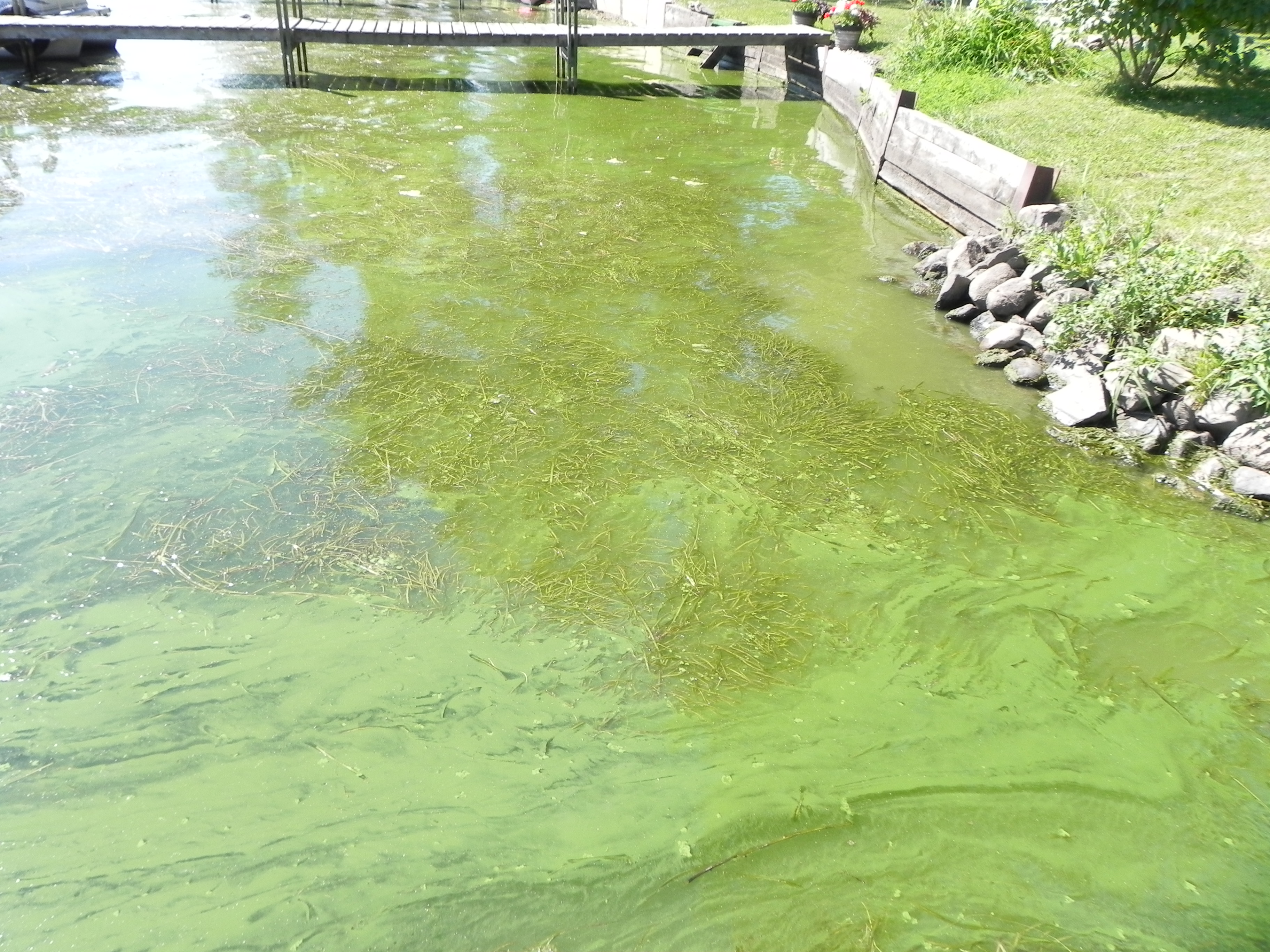
A blue-green algae bloom can cause water to:
- Appear blue-green, bright green or turquoise.
- Look like pea soup or as though paint has been spilled on the surface.
- Develop floating scum, streaks or thick mats.
- Produce a musty, garbage-like or rotten-egg odour.
Residents and cottagers are reminded to never use untreated water from a lake or river for drinking, cooking or preparing infant formula. Boiling water does not destroy blue-green algae toxins and may increase their concentration when water evaporates. Private water supplies and residential water treatment systems may not effectively remove these toxins.
If water appears to contain a bloom, assume toxins are present and avoid contact. Take the following steps to stay safe:
- Do not swim, wade or participate in water sports where a bloom is visible.
- Do not allow pets or livestock to swim in or drink affected water.
- Be cautious about eating fish caught from water where a bloom is present, particularly the organs, where toxins may accumulate.
- Do not apply herbicides, copper sulphate or other algaecides, as these can cause algae cells to break open and release additional toxins into the water.
Areas of the same lake or river that are well away from a visible bloom are generally considered safe for recreational use. However, avoid water where a bloom is present or where algae have accumulated along the shoreline.
If you suspect a blue-green algae bloom, avoid the area and report it to the Ontario Ministry of the Environment, Conservation and Parks through the Spills Action Centre. Public health, municipalities and environmental agencies work together to investigate confirmed blooms and inform the public.
When using local waterways this summer, watch for signs of blue-green algae and avoid water where a bloom is visible. Sharing this information with family and friends can help protect people, pets and the community.
For more information about blue-green algae, visit the Simcoe Muskoka District Health Unit’s webpage.