
In the past year, people have learned about excessive road salt usage and reduced their own personal usage. Building on this, Friends of the Muskoka Watershed is returning with our second annual SALTYNovember, brought to you by the SALTYMuskoka Projects.
Join us for a whole month of events, education, opportunities and more for SALTYNovember. A highlight is a short presentation and SALTY Q & A with Dr. Norman Yan, Dr. Neil Hutchinson and SALTYMuskoka Project Lead Alesha Breckenridge on Thursday, Nov. 19 from 7 to 8 p.m.
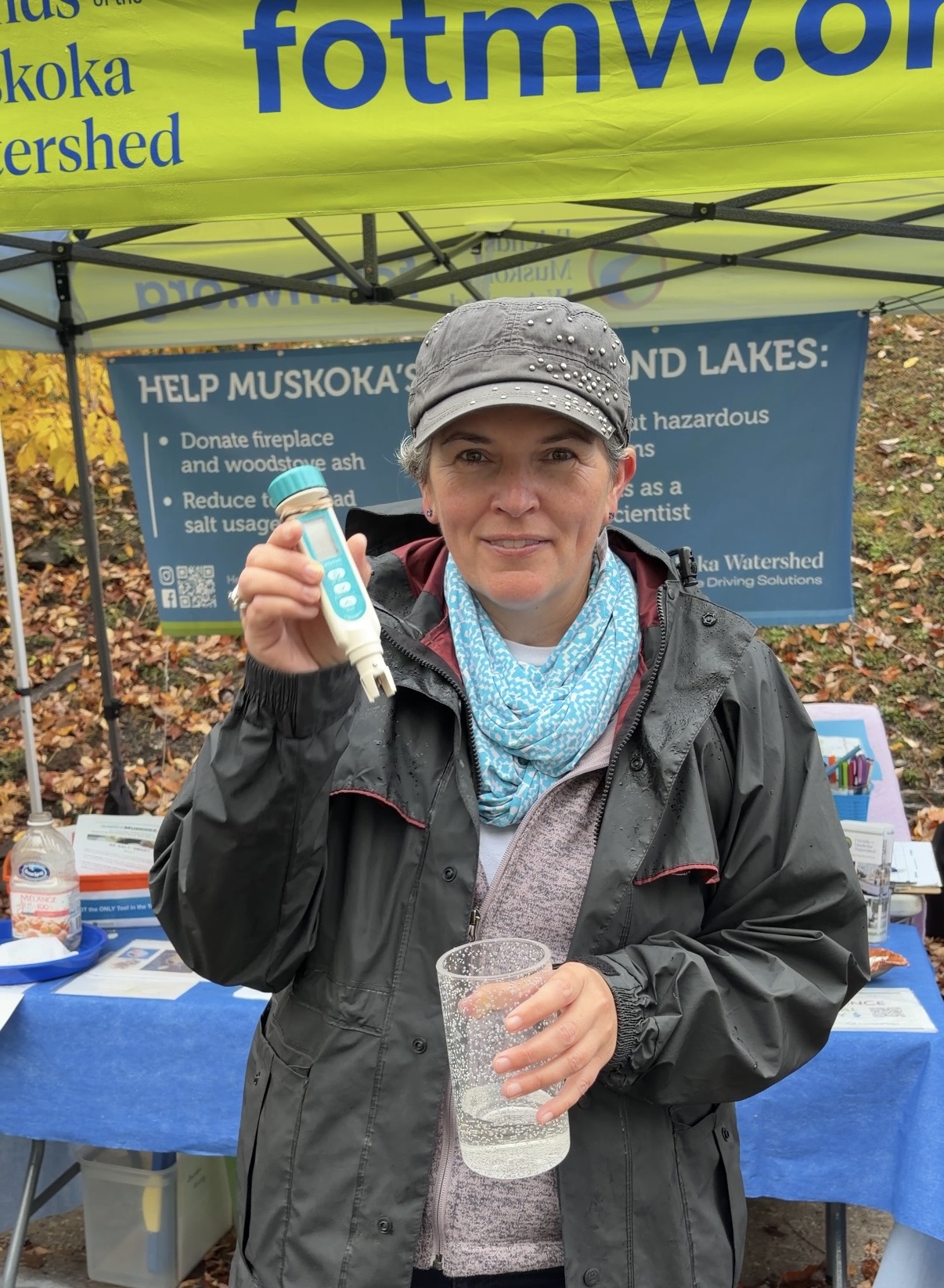
Do you want a green cup to carefully monitor your own road salt usage? Check our website for the list of libraries involved fotmw.org/events/
Do you have a dog that’s made for social media? Come to an event, pick up a PAWS the SALT bandana and send us a photo. Wait, if you chicken, goat or cat wants to wear one, we’d love those photos too.
We believe community members will continue to make a difference, fighting against excessive road salt usage. Want to learn more? We are popping up at stores across Muskoka this November. Visit https://fotmw.org/events/ to get all the dates and details.
Excessive road salt use is contaminating Muskoka’s lakes to the point where aquatic life is negatively impacted. One result is the decreasing population of the small creatures that eat the algae in the lakes. This could result in more algal blooms.
Road salt harms our area lakes but that’s not all. It destroys buildings, infrastructure like bridges and concrete structures, pets’ feet, leather shoes, vehicles and more. Using road salt has a huge negative financial impact.
“Our goal is to engage the Muskoka community (urban and lakeshore residents, schools, and commercial property owners) to reduce the use of road salt on residential properties, sidewalks and parking lots,” explains FOTMW director Dr. Norman Yan. Studies show that most people are using five to 10 times more road salt than required.
It’s estimated that about 20 percent of the road salt used in Muskoka is applied to parking lots, driveways and sidewalks.
How bad is the salt problem?
Levels of most pollutants, such as nitrogen, phosphorous, acidity and metals have either stabilized or fallen in Muskoka lakes. But road salt levels have increased in lakes with developed watersheds and will likely worsen with continued population growth and climate change unless action is taken.
- 28 percent of the recreational lakes tested by the District of Muskoka have chloride levels (from road salt) above what is considered safe for sensitive aquatic life in our soft waters. According to 2025 DMM data, 28 sampled sites have chloride above 10 mg/L.
- 72 percent of the sites have chloride higher than their ten-year average.
- Rising chloride levels in lakes across the watershed indicate inadequate management of the issue. It’s a problem that needs focus.
- Road salt changes the chemistry of the water, threatening the life in our lakes. It can even change the physics of lakes, altering the critical mixing in the spring that replenishes lake oxygen lost under winter ice cover.
- Individuals can make a difference. They can reduce or even stop using salt on their own property. Individuals can help document and track the issue by recording salt usage in their community. Individuals can educate and influence others about road salt.
To support our work, contact sandy@fotmw.org to volunteer or donate ash. To join as a member or donate visit https://www.canadahelps.org/en/charities/friends-of-the-muskoka-watershed/
Friends of the Muskoka Watershed is a charity that addresses severe freshwater issues, not managed by other agencies or organizations, that are widespread and the public can help solve.
For more information, please contact Sandy Lockhart, Communications Director, Friends of the Muskoka Watershed at Sandy@fotmw.org