
The OPP is reminding members of the public to be aware of the ongoing risks associated with the use of illicit drugs. The unregulated drug supply remains unpredictable and may contain substances that are far more potent than expected, including fentanyl and other dangerous contaminants that can significantly increase the risk of overdose, serious injury, and death.
Drug toxicity incidents can occur regardless of a person’s experience with substance use. Even small amounts of an illicit substance can have unexpected and potentially fatal consequences when the contents and strength are unknown.
The OPP encourages anyone who chooses to use drugs to take steps to reduce the risk of harm. Avoid using drugs alone, let someone know where you are, carry naloxone if opioids may be involved, and ensure those around you know how to recognize the signs of an overdose and respond appropriately.
Signs of an opioid overdose may include:
- Slow, shallow, or stopped breathing
- Blue or grey lips and fingernails
- Unresponsiveness or inability to wake the person
- Pinpoint pupils
- Choking, gurgling, or snoring sounds
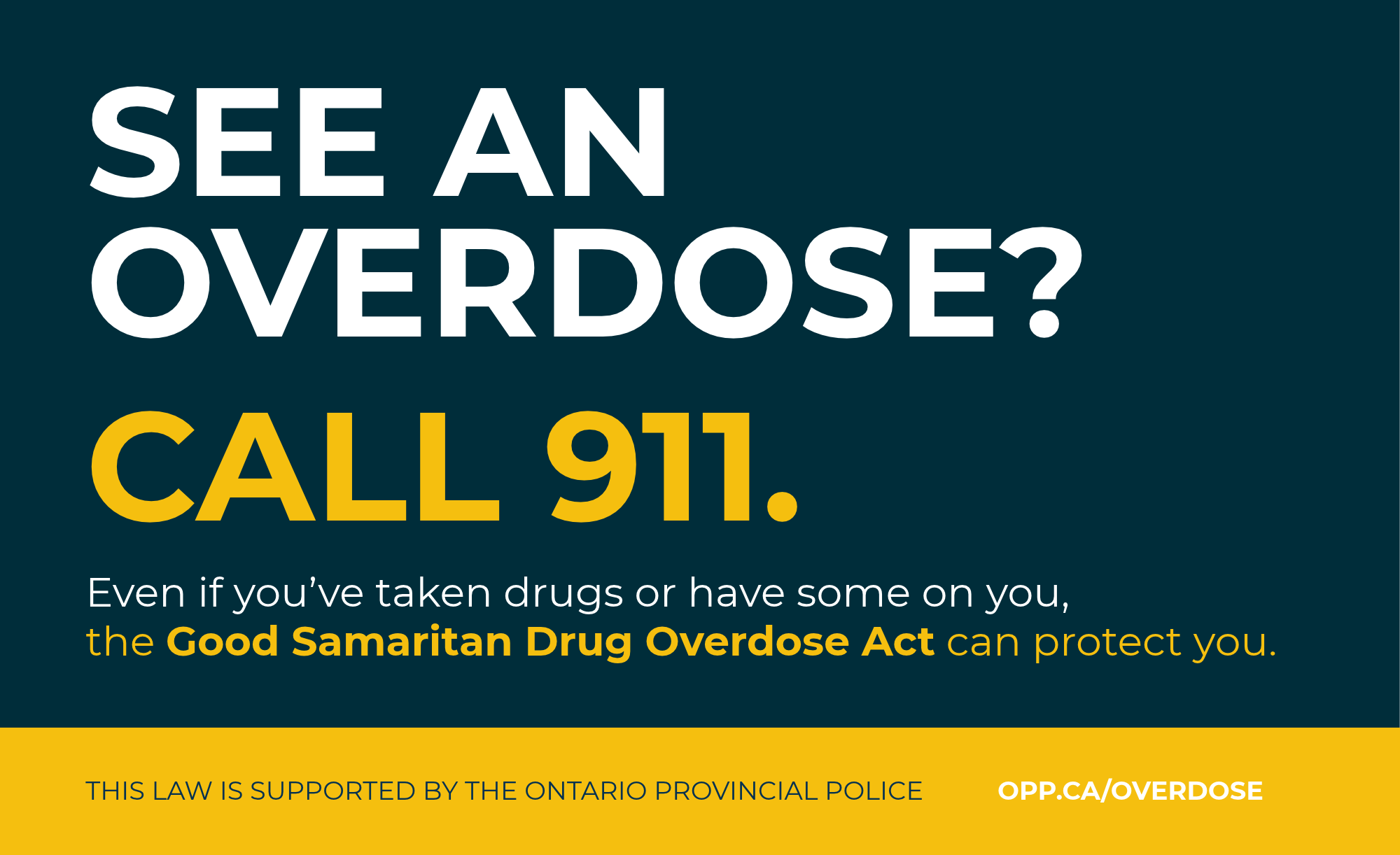
If an overdose is suspected, call 911 immediately. Administer naloxone if available and follow emergency dispatch instructions until medical assistance arrives. Naloxone is a temporary treatment that can reverse the effects of an opioid overdose, but it is not a substitute for emergency medical care. Anyone who receives naloxone still requires assessment and treatment by healthcare professionals.
The OPP reminds the public of the Good Samaritan Drug Overdose Act, which provides legal protections from simple possession charges and certain other offences for individuals who seek emergency assistance during an overdose. These protections may apply to the person experiencing the overdose, the person who calls for help, and others at the scene.
Prompt action can save a life. Recognizing the signs of an overdose and calling 911 without delay may make the difference between life and death.
For more information about naloxone, overdose prevention, and available community resources, contact your local public health unit or visit opp.ca/overdose.