

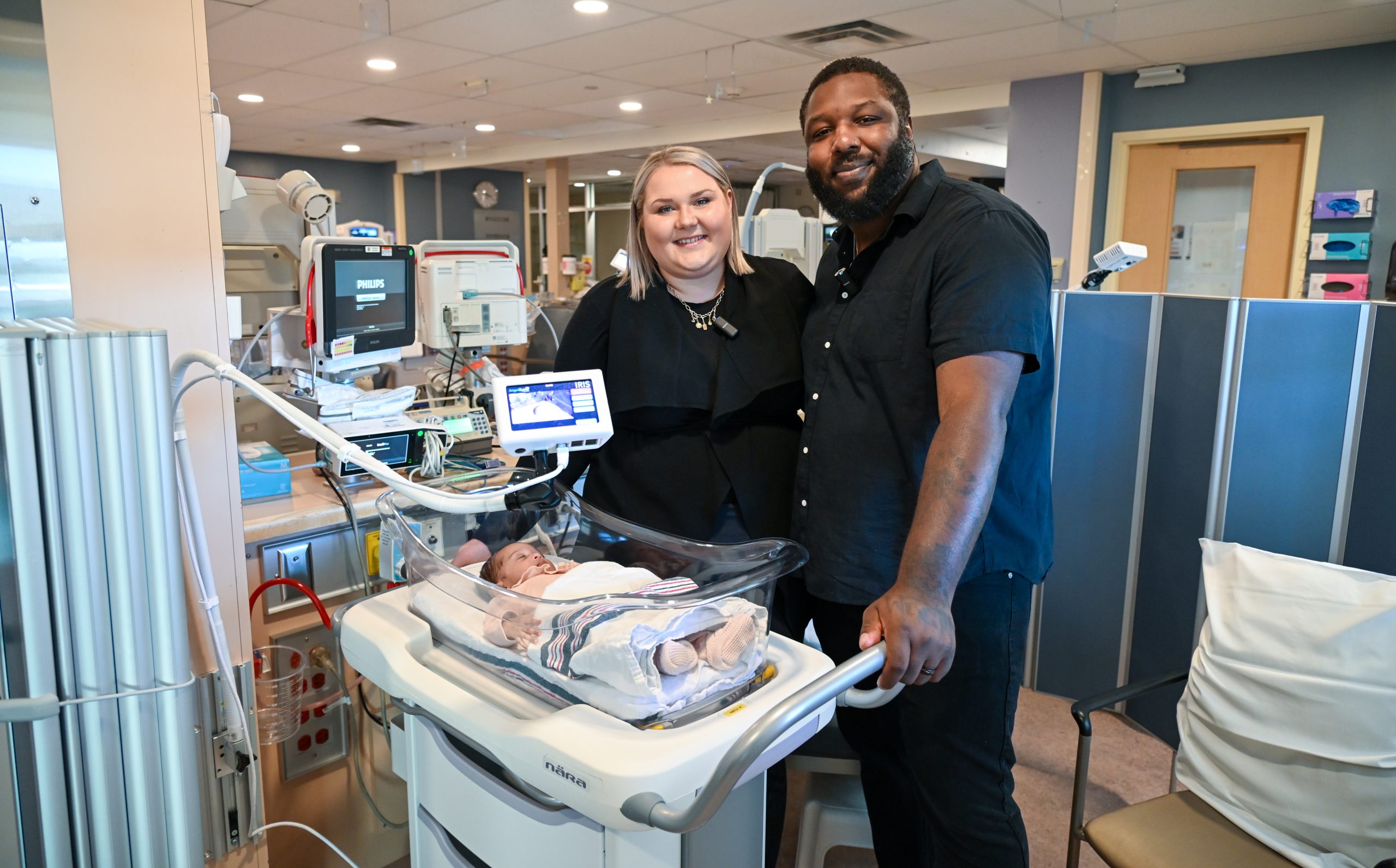
Royal Victoria Regional Health Centre (RVH) is the first hospital in Canada to introduce the AngelEye CameraSystem, an innovative technology that allows parents and loved ones to securely view their newborn in the Neonatal Intensive Care Unit (NICU) from anywhere, at any time, using a phone, tablet or computer.
The new system provides families with a secure livestream of their baby and enables care teams to share updates, helping parents stay connected during one of the most challenging times in their lives.
For families and caregivers with a baby in the NICU, separation can be unavoidable. Whether recovering from childbirth, caring for other children, balancing work responsibilities, or navigating transportation, financial or other challenges, being away from your newborn can be incredibly difficult.
AngelEye helps bridge that gap by providing secure access to a baby’s bedside, supporting parent-infant bonding, reducing stress and anxiety, and strengthening family connections. It also helps mothers feel connected during feeding and pumping routines, supporting breastfeeding and maternal well-being during a critical time for both parent and baby.
The inspiration for bringing AngelEye to RVH began during the COVID-19 pandemic, when visiting restrictions prompted NICU staff to find new ways to keep families connected to their babies through video technology.
“What started as a way to support new parents and caregivers during a difficult period made us realize just how valuable that connection is, regardless of visitor restrictions,” said Natalie Sherrit, Manager, NICU and Paediatrics at RVH. “They told us how meaningful it was to see their baby when they couldn’t be there. Now, bringing AngelEye to RVH builds on that experience by giving families and their support systems secure, reliable access to their newborn around the clock and helping them feel more involved and engaged in their baby’s care journey. It also helps mothers in their post-natal recovery and supports breastfeeding and milk production while their baby is receiving specialized care.”
RVH’s NICU cares for some of the region’s smallest and most vulnerable patients, admitting nearly 400 newborns each year. While the unit’s physical space is constrained and in need of future expansion, the team continually seeks innovative ways to enhance the experience of patients and families.
“Our team is incredibly committed to making every family’s experience as positive and supportive as possible,” said Sherrit. “While we’re mindful of the great need for expansion in our small and aging space, that has never stopped our staff from finding new ways to innovate, improve care and create exceptional experiences for families when they need us most.”
When their daughter Soleil arrived unexpectedly at 33 weeks and one day, first-time parents Brieanna and Rainier Croft found themselves navigating the uncertainty of a NICU stay. As the first family at RVH to use the AngelEye system, they experienced firsthand how the technology can provide comfort, reassurance, and connection during a difficult time.
“It’s so hard being separated from your baby,” said Brieanna. “Being able to see Soleil and know she was okay and receiving the best care possible was truly amazing. As first-time parents, it helped lessen so much of the anxiety that comes with having your baby in the NICU.”
For dad, Rainier, the technology helped the entire family feel connected.
“There’s a sense of closeness that comes from being able to pull up your phone and see your baby whenever you need to,” he said. “It’s incredible for parents, but also for grandparents and family members who may not be able to make the trip to the hospital. It helps everyone feel connected and involved during a very important time.”
The introduction of AngelEye is another example of RVH’s commitment to delivering an exceptional patient, family and caregiver experience while embracing innovative solutions that improve care and strengthen connections.
“We know that family presence is an important part of a baby’s development, building those early bonds and supporting the well-being of everyone involved in their care,” said Sherrit. “While technology can never replace being at the bedside, AngelEye helps families, caregivers and loved ones remain connected when circumstances don’t allow it.”
By reducing barriers to participation and supporting bonding, breastfeeding and family engagement in neonatal care, RVH is helping create a more compassionate and equitable experience for when families need it most.