
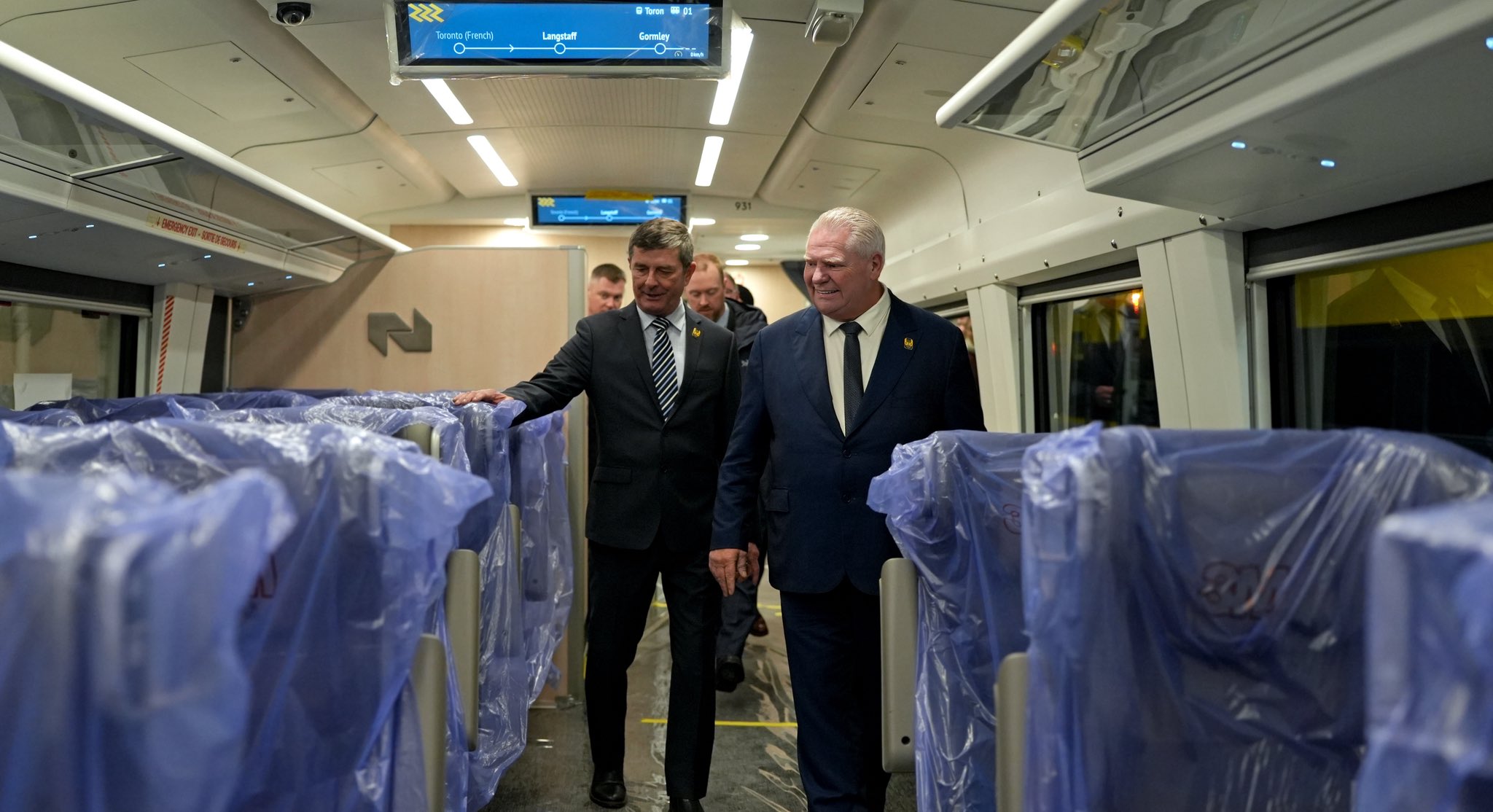
The Ontario government is marking a major milestone in its commitment to bring back the Northlander with the arrival of the first of three new Northlander trainsets in Ontario. The Northlander will span 740 kilometres with 16 stops between Timmins and Toronto, with a connection to Cochrane, and is part of the government’s work to protect Ontario’s economy by connecting northern communities, creating good-paying jobs, supporting local industries and driving economic growth across the north.
“Today is a great day for the people of Northern Ontario as we move another step closer to bringing the Northlander back into service, so families and workers can travel conveniently from Union Station all the way to Timmins and Cochrane,” said Premier Doug Ford. “Our government will continue to invest in the largest public transit expansion in Canadian history as part of our plan to create jobs, tackle gridlock and protect workers and businesses.”
The trainset is currently undergoing testing and commissioning work in Toronto before moving north, where Ontario Northland will begin testing the train along the Northlander corridor to ensure all systems function correctly and meet safety, performance and operating requirements. The Northlander is expected to return to service in 2026.
“Under the leadership of Premier Ford, our government is delivering on its promise to bring back the Northlander,” said Prabmeet Sarkaria, Minister of Transportation. “The Northlander is a key part of our $100 billion plan to build transit and highways so we can protect Ontario and connect families to good jobs, housing and the services they rely on.”
In 2025, the province began construction of Timmins-Porcupine Station, awarded the contract to reconstruct platforms and install shelters along the Northlander corridor and completed the North Bay Rail Bypass, which will cut travel times by 15 minutes.
Once complete, the Northlander will offer rail service from Toronto to Timmins, with a connection to Cochrane. Service will strengthen northern industries and the resource sector while improving access to good-paying jobs and essential services, including health care and education.